Just keep going
A Whoop Story

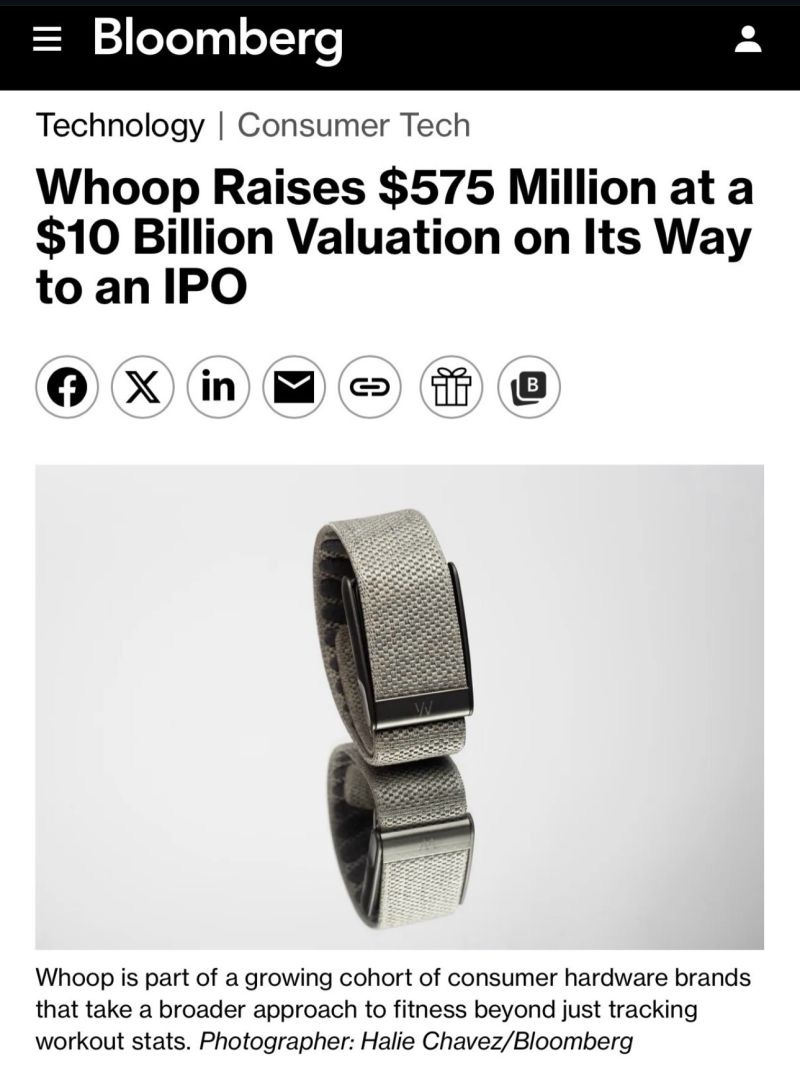
This week, Whoop raised $575 million at a $10.1 billion valuation. LeBron James, Cristiano Ronaldo, Mayo Clinic, Qatar Investment Authority, and Mubadala all put money in. 2.5 million members. Over $1 billion in annual bookings. Cash-flow positive.
The founder, Will Ahmed, posted this on X to mark the occasion:
“You have no experience. You’ve never started a company. You’ve never had a full time job. Nike is going to kill you. You’re a kid. You don’t have technical skills. You shouldn’t build hardware. Apple is going to kill you. You can’t build hardware. You can’t measure heart rate non-invasively. Athletes don’t care about recovery. Under Armour is going to kill you. It won’t be accurate. You don’t listen. You’re an ineffective leader. You can’t recruit great talent. You’re going to have to pay every athlete. You can’t measure sleep non-invasively. It’s too expensive to research. Athletes are a small market. The product costs too much to make. The product costs too much to sell. Your valuation is too high. Consumers aren’t going to want it. Hardware is too hard. You should measure steps. Fitbit is going to kill you. You can’t build a marketing engine. You can’t raise enough money. You need a real CEO. Google is going to kill you. You can’t be a subscription. You can’t build a brand. You can’t do consumer in Boston. Your valuation is too high. You shouldn’t make accessories. You shouldn’t make apparel. Lululemon is going to kill you. You can’t predict Covid. Stay in your niche. You are going to run out of money. You can’t build a health platform. Amazon is going to kill you. You can’t measure blood pressure. You can’t get medical approvals. The market is too small. You don’t understand AI. The market is too competitive. It won’t work internationally. The supply chain is too complicated. You can’t build an AI. You can’t raise enough money. It’s too competitive. Healthcare isn’t going to want it. … Just keep going”
Here’s what makes Will Ahmed’s story worth knowing.
He started Whoop in 2012, while still at Harvard. Not as a computer science student. Not as an engineer. As a government and economics major who played squash.
He wasn’t trying to start a company. He was trying to solve a personal problem. He kept overtraining, pushing his body too hard, and then crashing without understanding why. So he started reading. Medical papers, physiology research, anything he could find. He read around 500 papers and wrote one of his own.
That paper became the business plan for Whoop.
He had no technical background. He’d never built hardware. He’d never started a company. He’d never had a full-time job. He was 22.
Every reason not to build Whoop was a real reason.
Hardware is genuinely hard. The wearable market was dominated by Apple, Fitbit, Garmin. Athletes weren’t paying for recovery data. Nobody was going to take a college kid seriously. Investors said the market was too small, the product was too expensive, the technology wouldn’t work.
And they weren’t wrong. Not entirely. These were legitimate concerns. The difference is that Ahmed heard all of them and kept building anyway.
He didn’t have all the answers. He had a problem he cared about deeply and the stubbornness to keep going when the world kept telling him to stop.
Fourteen years later, Whoop has 2.5 million members. It’s valued at $10 billion. LeBron and Ronaldo don’t just wear it, they invest in it. The company is cash-flow positive with over a billion dollars in annual bookings. It has raised more than $900 million in total.
And the people who said “Nike is going to kill you” and “Apple is going to kill you” and “you need a real CEO” are watching a 22-year-old squash player’s obsession become one of the most valuable wearable companies in the world.
There’s a version of this story for every successful company. A phase where everyone around you has a reason why it won’t work. A phase where the people closest to you, not out of malice but out of genuine concern, tell you to be realistic.
Being realistic is good advice for most things. But building something new is not most things.
If you’re reading this and you’ve got a list of reasons in your head for why your thing won’t work, know this: Will Ahmed had a longer list. So did every founder who ever built something that mattered.
The list never goes away. You just learn to build alongside it.
Just keep going.
Campus Fund backs student founders and recent graduates across India. If you’re building, we want to hear from you, apply to Campus Fund here.